When we think of “homeless veterans,” we usually picture someone sleeping on a street corner. But that image is only the final stage of a much larger, hidden crisis.
The truth is, thousands of our nation’s veterans are trapped in a silent struggle—living just one minor emergency away from ruin. 📉
They aren’t on the streets yet. Instead, they are working full-time but barely making ends meet, couch-surfing, or spending over half their income on rent. Because their struggle is invisible, they miss out on early support. And when they try to enter high-paying civilian or federal roles, they run face-first into an entirely different roadblock: Systemic Risk-Aversion and Institutional Gatekeeping. 🛑
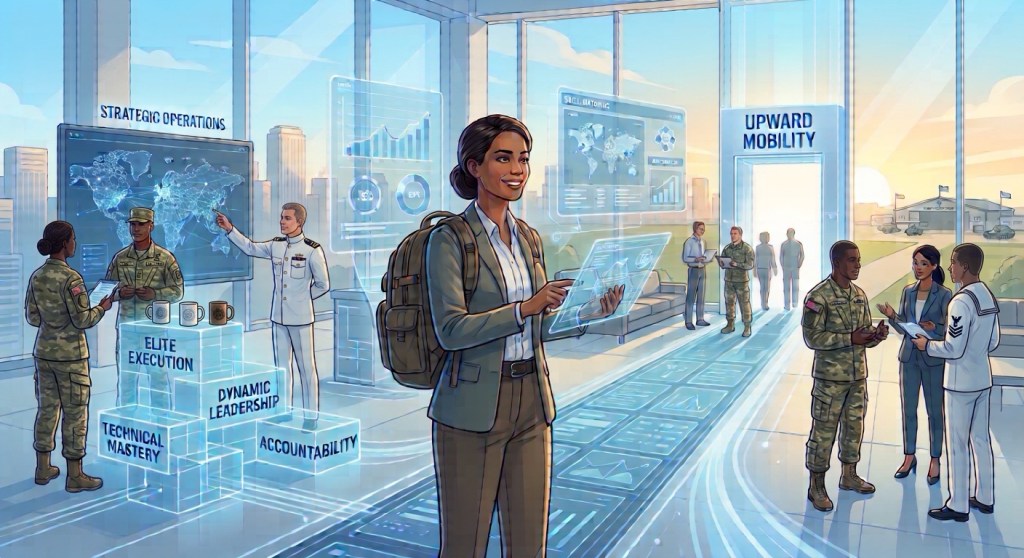
The military is fundamentally a non-stop, high-intensity training pipeline. Veterans are professional, rapid learners who excel at:
- ⚡ The Skillset of Change: Adapting instantly to volatile, chaotic environments.
- 🧠 Rapid Decision-Making: Making high-stakes choices under intense pressure.
- 🎯 Extreme Accountability: Carrying an ingrained culture of absolute ownership.
- 💻 Advanced Technical Aptitude: Operating complex, cutting-edge systems.
Yet, corporate HR algorithms and the federal government—the very entity that spent billions training them—routinely lock them out. They rely on lazy college degree filters as a proxy for capability, completely ignoring master’s-level practical leadership.
This is why America has a profound veteran employment crisis. It’s not a lack of talent; it’s an epidemic of underemployment. Nearly one-third (33%) of all veteran job seekers are underemployed—making them 15.6% more likely to be trapped in jobs below their capabilities than civilians.
When veterans bring their directness and zero-excuses execution into these sluggish workplaces, it triggers a resentment of competence from career bureaucrats and middle managers who prefer bureaucratic theater over raw execution. Because these systems suffer from deep-rooted risk-aversion, elite efficiency gets labeled as “abrasive” just to protect the status quo and ensure bureaucratic self-preservation.
This hypocrisy inflicts a deep moral injury on our veterans. 💔
They spent years serving a country and upholding elite standards shaped by generations of sacred traditions, honor, and history. To return home and find that the very systems they defended are governed by mediocrity, administrative laziness, and institutional betrayal is a profound psychological shock. They are forced to watch a nation they sacrificed for treat their elite capabilities as a liability rather than an asset.
This economic disconnection funnels them directly into a hidden housing crisis: today, roughly 1.5 million veteran-led households are severely cost-burdened, spending more than 50% of their income just to keep a roof over their heads. 🏠⛓️
We need to shift our focus from treating the crisis to preventing it. True appreciation isn’t a passive “thank you for your service” on holidays. It’s an active question we need to start asking the veterans in our workplaces:
“Are you actually being appreciated and utilized correctly here?” 🤝
Let’s dismantle the arbitrary barriers, adopt skills-based hiring, and make sure our veterans get the upward mobility they earned before they hit rock bottom. 🇺🇸
#SupportOurVeterans #HiddenCrisis #VeteranHiring #SkillsBasedHiring #CorporateAccountability #GovernmentFailure #ExecutionOverBureaucracy #MoralInjury #SystemicRiskAversion
Sources:
americanvetsgroup.com
callofdutyendowment.org
nlihc.org
urban.org


Leave a Reply